


How to Negotiate Amazon Vendor Agreements
Amazon vendor agreements can spell the difference between a brand that scales and one that loses margin without realising where the leaks are.
Unlike standard retail contracts, Amazon’s approach is fluid, data-heavy, and built around total business profitability, not just product cost. That complexity becomes even more obvious when you look at how brands actually operate on Amazon.
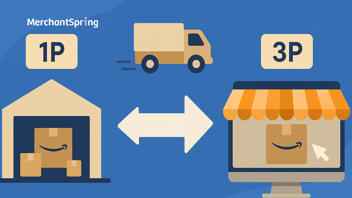
Only 33% of sellers operate purely as first-party (1P) vendors, while 12% sell only through third-party (3P) models. The majority (about 53%) sell using a hybrid model strategy.
.jpg?width=662&height=417&name=Image%201.%20Percent%20of%20Sellers%20on%20Amazon%20(Source%20%E2%80%93%20Feedvisor%20via%20MetricsCart).jpg)
What Are Amazon Vendor Agreements?
Vendors operate in a different way than standard sellers. 3P brands sell directly to shoppers and control pricing, inventory levels, and listing strategy. In contrast, Vendors operate as an Amazon vendor within Amazon Vendor Central, meaning:
- They sell inventory wholesale to Amazon
- Amazon then sells those products to customers
Amazon vendor agreements are the formal business arrangements that define how 1P brands supply products directly to Amazon.
When a brand runs both Vendor Central and marketplace operations, the Amazon vendor contract doesn’t just affect wholesale margins, but also influences:
- Pricing strategy
- Channel conflict
- Inventory planning
- Overall profitability
Key Components of an Amazon Vendor Contract
1. Cost and Pricing Structure
Pricing discussions typically go far beyond base product cost. An Amazon Vendor agreement often revolves around:
- Base cost of goods sold to Amazon
- Cost increase allowances
- Early payment discounts
- Freight or shipping allowances
- Damage, shortage, or operational allowances
- Trade spend or co-op contributions
External economic trends, especially manufacturing costs and global inflation, often set the tone for how flexible Amazon is willing to be during negotiations. For example, cost increase allowances might fluctuate due to inflation or supply chain disruption.
Supplier selling prices (Purchasing Managers’ Index, or PMI) tend to outpace consumer inflation (Consumer Price Index, or CPI), indicating that production and manufacturing costs often rise before those increases reach consumers.
.jpg?width=730&height=460&name=Image%202.%20Global%20consumer%20price%20inflation%20and%20PMI%20selling%20prices%20(Source%20%E2%80%93%20S%26P%20Global).jpg) For an Amazon vendor, this matters because rising PMI data can serve as early evidence when negotiating pricing and cost structure adjustments inside Amazon vendor agreements.
For an Amazon vendor, this matters because rising PMI data can serve as early evidence when negotiating pricing and cost structure adjustments inside Amazon vendor agreements.
2. Trade Terms and Allowances
Trade terms and allowances are the additional financial contributions vendors make to support Amazon’s retail operations and growth initiatives. For any Amazon vendor, these typically include:
- Co-op funding
- Freight allowances
- Damage or shortage allowances
- Promotional support
Strong Amazon vendor negotiations focus on total cost-to-serve, not just product pricing.
3. Operational Terms
Operational terms define how efficiently a vendor must supply inventory into Amazon’s network. These terms usually cover requirements like:
- On-time, in-full (OTIF)
- Delivery performance
- Packaging and labeling compliance
- Routing accuracy
- Shipment documentation standards
Failing to meet these requirements can trigger chargebacks on Amazon, which directly reduce vendor profitability.
4. Marketing and Growth Contributions
One out of 5 businesses spends more than $10,000 monthly in digital marketing.
.jpg?width=703&height=443&name=Image%203.%202025%20Monthly%20Digital%20Marketing%20Investment%20(Source%20%E2%80%93%20WebFX).jpg)
For an Amazon vendor, this aligns directly with marketing and growth contributions. These are investments vendors make to support visibility on Amazon. For instance:
- Funding for retail events
- Promotional campaigns
- New product launches
- Category marketing initiatives
In other words, marketing and growth contributions are strategic investments that help drive visibility, demand, and long-term revenue performance.
Amazon Vendor Negotiation Strategies
Here are a few strategies to consider to get the best terms:
Trade, Don’t Give
Every concession should be exchanged for value, not given away. If Amazon requests:
- Higher co-op funding
- Freight support
- Cost reductions
Vendors could negotiate for:
- Increased purchase volume
- Improved payment terms
- Expanded assortment opportunities
Strong Amazon vendor negotiations focus on total business value, not single-term pressure, ensuring each financial give is balanced by measurable growth.The goal is to protect your profit margins while maintaining partnership strength.
Anchor Negotiations in Data
Data should anchor all Amazon vendor agreements. Data is one of the strongest tools in a vendor negotiation. For instance, higher conversion rates and lower return risk often correlate with trust signals like:
- Strong brand loyalty
- Repeat purchase rates
- High review ratings
49% of businesses use analytics primarily for better decision-making, while 16% report improved enablement of strategic initiatives.
.jpg?width=686&height=432&name=Image%204.%20Benefits%20of%20Data%20Analytics%20for%20Businesses%20(Source%20%E2%80%93%20DATAFOREST).jpg)
Many brands work with experienced consultants to help analyse performance data, interpret customer sentiment metrics, and benchmark category trends. This analysis allows vendors to build stronger cases for pricing stability, marketing support, or trade term flexibility.
Negotiate Total Business, Not Single Line Items
Successful vendors negotiate based on total business impact, not isolated costs. Instead of focusing only on unit price or allowances, you should position negotiations around overall contribution, including:
- Category growth
- Traffic generation
- Long-term assortment expansion
This approach helps shift discussions from cost reduction to value creation.
Document Everything
Documentation protects you during and after negotiations. Vendor managers can change, priorities can shift, and verbal agreements can be forgotten. To help prevent disputes later, be sure to keep detailed records of:
- Negotiation terms
- Approvals
- Performance commitments
Strong documentation also helps you track historical concessions and performance improvements, which becomes valuable data for future Amazon vendor agreements.
The Bottom Line
Amazon vendor agreements are long-term profitability frameworks that shape how your brand operates across Amazon’s retail ecosystem.
It’s crucial to treat vendor contracts as a business function and once-a-year task. This will put you in a better position to protect margins while still meeting Amazon’s expectations.
In the end, the goal isn’t to “win” against Amazon, but to reach an agreement that supports both Amazon’s retail model and your long-term success.





Add a Comment